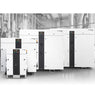
Adsorptionstrockner
Adsorption dryers are either directly integrated into the ventilation system or used as standalone units in the room. Due to their very high drying performance with each pass through the device, they are also ideally suited for drying water damage in subfloors or cavities. Adsorbers (also called desiccant dryers) have an almost constant dehumidification performance across the entire temperature spectrum from -30°C to +35°C. They are therefore also perfect problem solvers in cold rooms, even well below freezing.
How does adsorption drying work?
In contrast to condensation dehumidifiers, adsorbers operate technologically without a compressor. Humid air is drawn in and passed over a silica gel wheel. Silica gel has the property of being able to absorb a lot of moisture very quickly. The dried air is then released into the room. Depending on the situation, the dried air is not simply blown into the room, but is directed through ducting into ventilation systems or specifically into cavities, shafts, or substructures, etc. The moisture that the silica gel wheel captures is immediately dried again by a second, counterflowing air stream. This is the so-called regeneration air. This regeneration cycle draws in outside air and heats it with a heating element. This warm air can now temporarily absorb a lot of moisture from the silica gel and immediately release it back into the environment (usually through hoses or pipes). If it is not possible to vent the humid air outside, a refrigerant module that condenses air can be attached. This module allows the humid warm air to condense. The condensate formed is then drained away through a hose.
All adsorption devices are equipped with a built-in PTC heating element. To recover the generated heat, a heat recovery system (HR) can be optionally connected.
"In our offer, we provide adsorption dehumidifiers in various strengths, from small and portable to large, permanently installed and piped systems."